REFERENCE PROJECTS
High FOG industrial wastewater into energy.
Anaerobic treatment of industrial wastewater high in fats, oils and grease (FOG) from poultry processing, rendering and fish and tuna processing. Our team built and operated these plants in South Africa and Mauritius, and supports projects in Europe and North America today.
REFERENCE PROJECTS
Two plants, two demanding effluents.
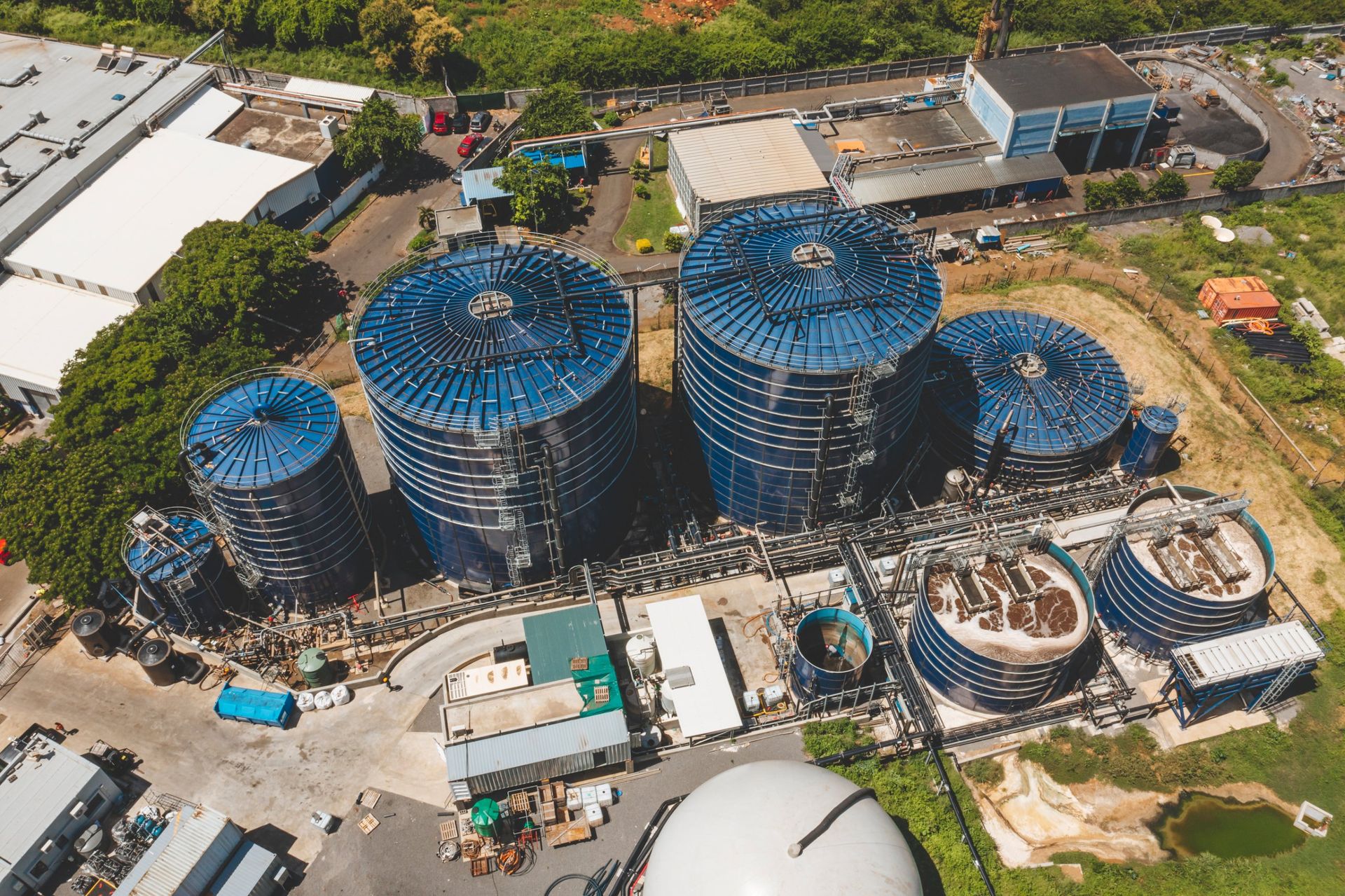
Energie des Mascareignes (EDM)
Mauritius
A waste-to-value plant treating high-strength, fat-rich effluent from tuna processing. Anaerobic digestion converts the organic load into biogas that replaces fossil fuel in industrial processes, followed by biological treatment, including nitrogen removal, to meet discharge requirements. Our team engineered, built and operated the plant while at Green Create, and Cirvanta continues to provide technical support.
Feedstock Tuna processing wastewater, high in fats, oils and grease
Scope Engineering / Construction / Operations / Ongoing technical support
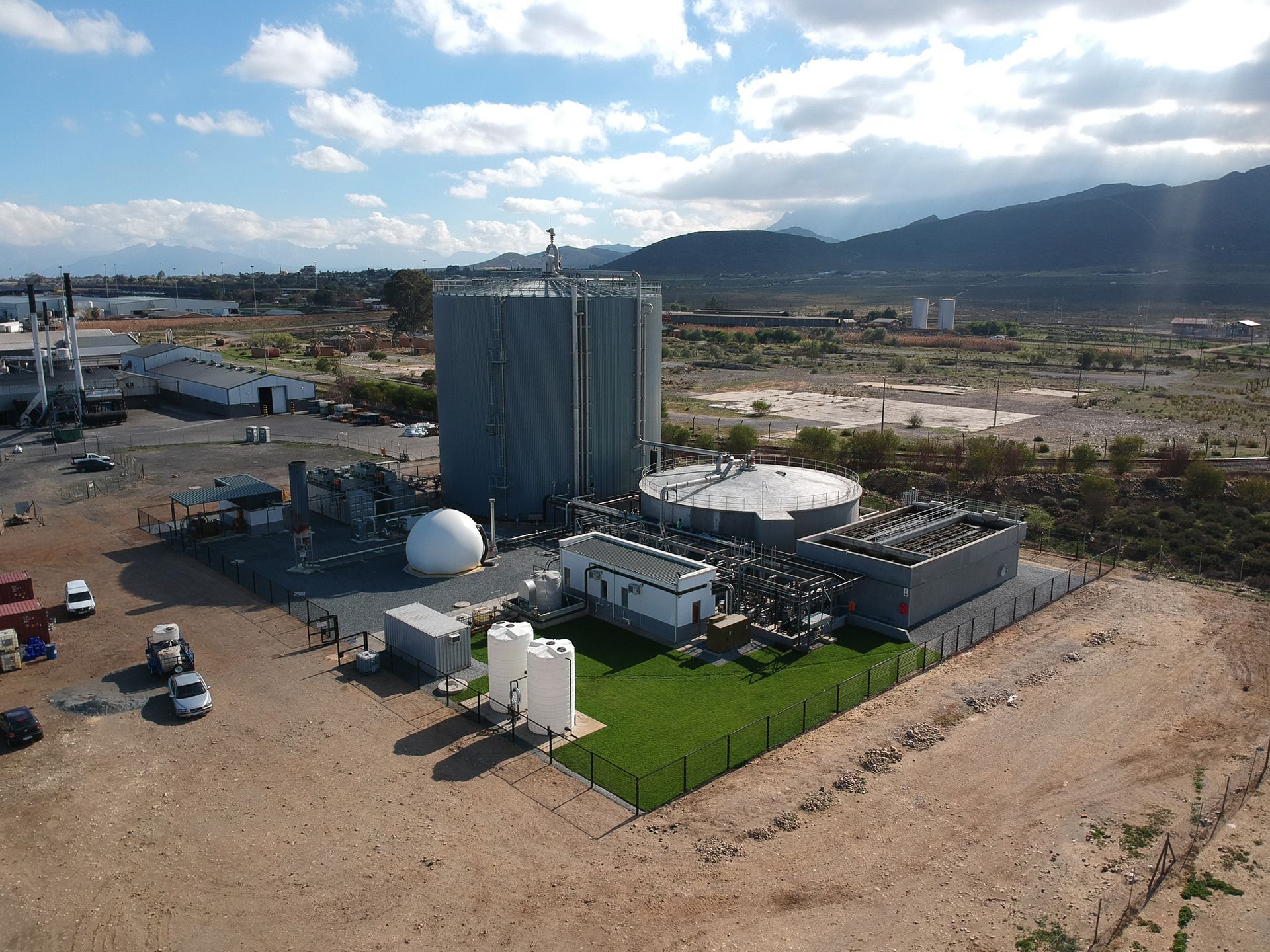
Worcester
Western Cape, South Africa
An anaerobic treatment plant for effluent from poultry processing. The plant produces biogas, electricity and heat, returns clean water and reduces the load on municipal wastewater infrastructure. Our team engineered, built and operated it while at Green Create, and Cirvanta continues to provide technical support.
Feedstock Poultry processing wastewater, high in fats, oils and grease
Scope Engineering / Construction / Operations / Ongoing technical support
WHY FATS, OILS AND GREASE ARE DIFFICULT
High energy, high risk, unless the plant is designed for it.
Foaming and scum
Fats, oils and grease float, form scum layers and drive foaming that can block gas lines and take digesters offline. Pre-treatment and digester design must keep them under control.
Fatty acid inhibition
As fats break down they release long-chain fatty acids, which inhibit methane-forming bacteria if loading is not managed. Stable feeding and good monitoring are essential.
Variable, high-strength flows
Production-driven effluent swings in flow and strength. Buffering, robust process control and biological polishing keep the plant stable and compliant.
HOW WE HELP
From design to compliant, stable operation.
Process Engineering (FEL 0–3)
Feasibility, process design and detailed engineering for anaerobic and biological treatment of high-strength industrial wastewater, including fat removal and biogas use.
Owner’s engineering
Independent technical oversight for industrial owners, developers and investors, from technology selection through construction and commissioning.
Operations support
Troubleshooting, process and biological monitoring and remediation strategies that restore reliable performance and regulatory compliance.
PROJECT GALLERY
Mauritius and South Africa.
WHERE WE WORK
FOG wastewater treatment where you operate.
We have built and operated anaerobic FOG wastewater plants in Southern Africa, and engineer new projects for food, poultry and rendering processors in Europe and North America.
Southern Africa
South Africa · Mauritius
Worcester (poultry processing) and Energie des Mascareignes (tuna processing): engineered, built and operated by our team.
North America
United States
Feasibility and concept engineering, with CAPEX and OPEX estimates, for a greenfield industrial wastewater plant treating rendering wastewater, blood and DAF sludge.
Europe
Netherlands and wider EU
Process and owner’s engineering for food and agri-industrial processors looking to cut sludge disposal costs and recover energy from FOG-rich effluent.
FREQUENTLY ASKED QUESTIONS
FOG wastewater treatment, answered.
What is FOG wastewater?
Industrial wastewater high in fats, oils and grease (FOG), typical of poultry processing, rendering, fish and tuna processing, dairy and edible oil production. It is high-strength and difficult to treat with conventional aerobic systems alone.
Can FOG wastewater be treated with anaerobic digestion?
Yes. With the right pre-treatment, such as dissolved air flotation (DAF), and controlled loading, anaerobic digestion turns the organic load into biogas for heat, power or biomethane, and cuts sludge and energy costs.
What are the main challenges with FOG-rich wastewater?
Foaming and scum layers, inhibition of the biology by long-chain fatty acids, strongly varying flows and loads, and nitrogen limits on the treated water. These need to be designed for from the start.
Where does Cirvanta work on FOG wastewater projects?
Our team built and operated FOG wastewater plants in South Africa and Mauritius, and we work on projects in the United States and Europe, from feasibility and process design to operations support.

Ready to rethink waste?
Let us build value from what others discard.